
The breakneck speed at which machine learning architectures are currently evolving has created a profound sense of professional disorientation among even the most sophisticated engineering teams. This “chaos” is not merely a byproduct of technical complexity but stems from a fundamental inability to define the specific type and scope of intelligence required for various organizational tasks. When a field moves at such an exponential rate, a brief absence from the workflow can render a professional’s hard-earned knowledge obsolete within a matter of months. This constant state of flux represents a significant shift in how technology must be managed, moving away from static implementation toward a more fluid, strategic framework. Organizations often find themselves overwhelmed by the sheer scale of possibilities, struggling to differentiate between high-value applications and distracting trends that offer little in terms of tangible business results or long-term operational sustainability.
Establishing Boundaries in an Unbounded Field
Unlike previous technological revolutions, such as the rise of mobile computing or the transition to the cloud, modern artificial intelligence often lacks clearly defined functional parameters. While cloud computing serves a specific role in infrastructure and scalability, intelligence is frequently described by industry leaders as being “everything everywhere,” which leads to a crisis of unbounded scope. This absence of a metaphorical “box” to contain the technology’s potential makes it incredibly difficult for companies to find a concrete path to implementation. Without these guardrails, projects tend to drift without a clear purpose, consuming resources without delivering the intended transformative value. Establishing these boundaries is not about limiting innovation but about ensuring that every technical decision is anchored to a specific organizational need that justifies the inherent complexity of the deployment process.
To reclaim control over this sprawling landscape, developers and leadership teams must adopt a structured approach based on the principles of defining, targeting, scaling, and growing their initiatives. By setting deliberate boundaries early in the development cycle, organizations can prevent themselves from being swallowed by the vast, often distracting possibilities of the field. The ultimate goal is to move away from a “hammer looking for a nail” mentality, where a specific model is forced onto every problem regardless of fit. Instead, a focused strategy should be employed where the technology is applied with surgical precision to solve specific business problems. This disciplined approach allows for the creation of a sustainable roadmap that prioritizes high-impact use cases while maintaining the flexibility to adapt as the underlying technology continues its rapid advancement through the current decade.
Defining the Minimum Intelligence Requirement
A critical step in managing development is determining the exact level of intelligence required for a given solution, as not every problem necessitates a complex large language model. In many cases, over-engineering leads to unnecessary operational costs, increased latency, and long-term maintenance burdens that can cripple a project’s viability. Strategic definition should occur across three tiers: rule-based logic, pattern-recognition systems, and deep neural architectures. Good Old-Fashioned AI, or rule-based systems, remains the most practical and efficient solution for many business use cases where transparency and fixed logic are paramount. By identifying which problems can be solved with traditional code, teams preserve their most expensive resources for challenges that truly require the predictive power of machine learning or the generative capabilities of advanced transformer models.
Adhering to the principle of “Minimum Intelligence” allows developers to choose the simplest possible model that effectively resolves the customer’s problem without adding needless friction. By starting with rule-based systems or traditional machine learning, teams can maintain a level of transparency and efficiency that is often lost in more complex architectures. Complex deep learning should only be utilized when it is strictly necessary, ensuring that the sophistication of the tool matches the complexity of the task at hand. This methodology reduces the “black box” effect and makes the resulting system much easier to audit and update. Furthermore, using simpler models where appropriate decreases the environmental and financial costs associated with high-compute environments, leading to a more responsible and scalable integration of intelligent systems into the corporate stack.
Targeting Problems through Continuous Refinement
The traditional software development life cycle, while robust for standard applications, is no longer sufficient for artificial intelligence because models are inherently prone to decay. Unlike static code, an intelligent system’s performance can “drift” over time as the data it encounters in the real world begins to diverge from its initial training set. To combat this inevitable degradation, a permanent stage of refinement must be integrated directly into the system’s architecture rather than being treated as an afterthought. Refinement is a continuous loop that feeds user feedback and real-world performance metrics back into the model to maintain its accuracy and relevance. This ensures that the system remains an asset rather than becoming a liability that provides increasingly inaccurate outputs as external market conditions and user behaviors shift.
This fundamental shift in methodology requires developers to step out of their technical silos and adopt a “top-down” view of their projects to ensure alignment. Because a model’s performance directly impacts the organizational charter, the business case must be treated as a living requirement rather than a static document signed at the project’s inception. Continuous refinement ensures that the solution remains aligned with the company’s goals, evolving alongside the market rather than becoming a legacy burden that is too expensive to fix but too critical to shut down. This proactive stance on model maintenance fosters a culture of accountability where technical teams and business stakeholders work in tandem to monitor performance. Consequently, the organization can pivot its technical strategy based on actual performance data rather than relying on theoretical assumptions.
Scaling via Service-Oriented Architecture
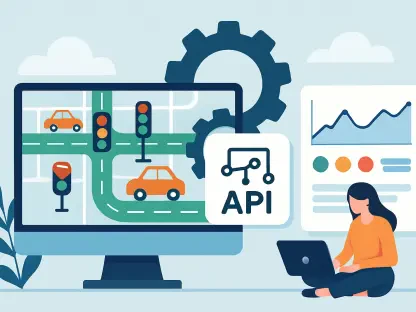
As intelligent applications grow in complexity, the structural challenges of scaling become more apparent, especially when relying on external services like cloud-based endpoints. To maintain long-term agility, organizations must shift toward a microservices mindset, decoupling specific functions into independent units that can be updated or replaced. This service-oriented approach ensures that if a specific model receives a major update or if a company needs to switch providers for cost or performance reasons, the entire codebase does not require a total rewrite. In an era where new models are released almost weekly, the ability to swap components without disrupting the broader ecosystem is a significant competitive advantage. This modularity prevents vendor lock-in and allows for a more diverse technical stack that can leverage the strengths of different providers.
By treating these components as modular services, businesses can adapt to rapid market shifts without crippling their internal infrastructure or incurring massive technical debt. This architectural flexibility is essential in a landscape where cloud providers are increasingly moving toward “model-as-a-service” offerings that abstract away much of the underlying hardware. Decoupling allows for a plug-and-play environment where the latest innovations can be integrated into existing systems with minimal disruption to the end-user experience. Furthermore, this approach facilitates better resource allocation, as teams can scale specific high-demand services independently of the rest of the application. The result is a more resilient and cost-effective infrastructure that can handle the unpredictable demands of modern, data-intensive workloads while maintaining high availability.
Managing Growth through Layered Maturity
Organizational growth in the technology space is not a linear path but a layered accumulation of different capabilities that must be nurtured simultaneously. According to established maturity models, this progression moves from basic awareness and active experimentation to operational efficiency and, eventually, autonomous systems. However, successful companies do not wait to master one level before starting the next; they run multiple tracks in parallel to ensure a holistic and aggressive approach to integration. This allows the organization to build a foundation of literacy while simultaneously delivering practical value through targeted pilot programs. By avoiding a sequential approach, leaders can identify potential roadblocks in the advanced stages while the team is still perfecting the basics, leading to a more robust and well-rounded strategy.
For instance, an organization might deploy operational systems to streamline internal back-end tasks while simultaneously running literacy programs to ensure ethical use. This multi-track strategy allows for steady progress in both technical capability and cultural readiness, which is often the biggest hurdle to successful integration. By balancing immediate practical applications with long-term strategic goals, teams can achieve a state of maturity where these tools become core drivers of value. This layered approach also helps in managing the expectations of stakeholders, as it provides a steady stream of “small wins” that demonstrate the technology’s potential. Over time, these individual successes coalesce into a comprehensive organizational capability that is far more than the sum of its parts, providing a clear path toward full-scale autonomous operations.
Leveraging the Power of Open Source Collaboration
The current inflection point in technological development is fueled by several converging trends, including the explosion of data and the democratization of computing power. However, the most significant driver of the field’s “blinding speed” is the robust open-source ecosystem that has flourished from 2026 and continues to expand. This transition from enterprise-controlled research to global collaboration has created an environment where improvements and innovations are shared almost instantly across borders. The collective intelligence of millions of developers ensures that bugs are found faster and new architectures are optimized more efficiently than any single corporation could manage alone. This shift has fundamentally changed the economics of innovation, allowing smaller players to compete with industry giants by building upon high-quality, community-driven foundations.
The open-source model allows individual developers to access resources and architectures that were once reserved for the world’s largest and wealthiest corporations. This collaborative spirit has accelerated the pace of discovery and significantly lowered the barrier to entry for strategic integration across various sectors. By participating in and leveraging this ecosystem, organizations can stay at the absolute forefront of the industry, utilizing the collective intelligence of the global community to solve complex local problems. Furthermore, the transparency of open-source projects provides a level of security and auditability that proprietary systems often struggle to match. As the ecosystem continues to mature through 2027 and beyond, the reliance on shared knowledge will only increase, making community engagement a vital component of any forward-thinking technical strategy.
The management of technological chaos required a fundamental shift from reactive implementation to a disciplined, service-oriented framework. Success was found by organizations that deliberately defined their intelligence requirements and prioritized simpler, rule-based systems whenever those models sufficed for the task. These teams integrated continuous refinement loops into their architectures, ensuring that systems remained accurate as real-world data evolved over time. By adopting microservices, they maintained the agility to swap models and providers without incurring prohibitive technical debt or systemic downtime. This multifaceted approach, combined with active participation in the global open-source community, allowed developers to transform overwhelming complexity into a structured, scalable asset. Moving forward, the most effective strategies involved a commitment to modularity and a focus on solving specific business problems rather than chasing every emerging trend.