
The rapid transition from text-based interfaces to unified multimodal reasoning engines marks a significant milestone in the evolution of artificial intelligence during the current 2026 landscape. Developers are no longer restricted to feeding models isolated strings of text; instead, they are architecting systems that can simultaneously digest video, audio, and complex technical documentation to provide high-context insights. Gemini 3 represents the pinnacle of this shift, offering an Omni-Modal Transformer Architecture that treats every data type as a first-class citizen within a single neural framework. This structural change eliminates the need for fragmented preprocessing pipelines that once slowed down sophisticated AI deployments. By mastering the Gemini 3 API, engineers can move beyond simple chat interfaces to create agentic systems capable of autonomous research, real-time visual analysis, and deep-reasoning tasks. Understanding the nuances of this architecture is essential for any professional looking to leverage the full potential of modern large language models in a production environment.
1. Structural Progression: The Importance of Gemini 3
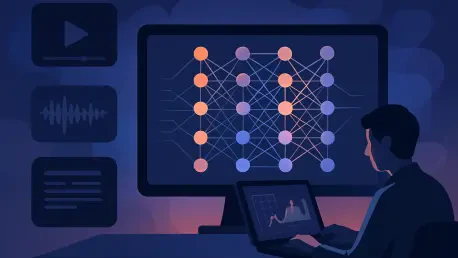
The architecture of Gemini 3 moves away from the traditional “late-fusion” models where different data modalities were processed by separate encoders before being joined at the final layer. In this new Omni-Modal Transformer Architecture, text, images, audio, and video are integrated into a unified reasoning framework from the very beginning of the training process. This fundamental shift allows the model to perceive the world more like a human, recognizing how a specific sound in an audio file correlates directly with a visual movement in a video stream. For developers, this means the model can perform cross-modal reasoning without losing the subtle contextual nuances that often disappear when data is converted into intermediate text descriptions. This native integration is what enables the model to handle diverse inputs with such high levels of accuracy and speed, making it a robust choice for next-generation software.
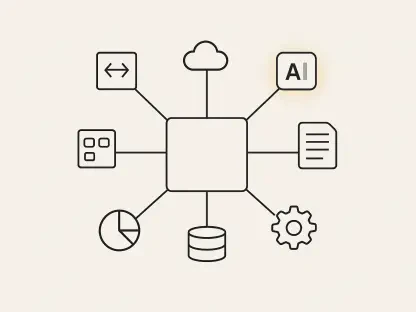
Beyond the core transformer logic, the structural integrity of Gemini 3 is supported by two critical components: the Context Manager and the Tool Registry. The Context Manager is engineered to supervise up to 2 million tokens, providing a massive workspace where the model can maintain long-term coherence over hours of video or thousands of pages of text. Simultaneously, the Tool and Function Registry facilitates real-world interaction by allowing the model to bridge the gap between digital reasoning and physical or API-driven actions. When an application requires the model to perform a task like checking a live database or controlling a remote sensor, the Tool Registry provides the necessary interface for secure and structured function calling. Together, these elements form a decoupled architecture where the LLM serves as a central reasoning engine, coordinating complex workflows across various data streams and external software ecosystems.
2. Measuring Gemini 3 Against Older Versions
When evaluating the current progress of AI development from 2026 to 2028, the improvements in Gemini 3 over its predecessors become immediately apparent through its specialized “Reasoning Tokens.” Unlike Gemini 1.5 Pro, which relied on standard chain-of-thought processing, Gemini 3 utilizes an optimized recursive logic that allows it to “think” before it speaks, refining its internal logic paths to minimize errors in complex tasks. This versioning shift also introduces varying tiers designed for specific enterprise needs. While the Pro model is the workhorse for most multimodal applications with its 2-million-token window and low latency, the Ultra variant pushed the boundaries further with a limited preview of 5-million-plus tokens. This massive capacity allows the Ultra model to operate as a truly autonomous agent, handling entire codebases or multi-day video archives without the need for traditional data chunking methods.
Latency and efficiency have also seen drastic improvements in this generation, specifically through the introduction of advanced context caching. In previous iterations, processing a large document repeatedly would incur full costs and significant delays for every query. Gemini 3 solves this by implementing state-persistent caching, which allows the model to “remember” a large static context once it has been loaded, significantly reducing the time to first token. This makes the 3 Pro model significantly faster than the 1.5 Pro for repetitive high-volume tasks. Furthermore, while the older models focused primarily on text and standard images, Gemini 3 has expanded its native modalities to include 3D point clouds and high-fidelity temporal video data. This expansion ensures that developers working in fields like robotics, architecture, or advanced security have the tools necessary to build models that understand spatial and temporal relationships.
3. Preparing the Coding Environment
Starting the development journey with Gemini 3 requires a properly configured environment that can handle the high-throughput demands of multimodal data. The primary requirement is a Google Cloud project or an AI Studio account, where developers can manage their API keys and monitor resource consumption. On the local side, Python 3.10 or higher is mandatory to ensure compatibility with the latest asynchronous libraries used by the SDK. After securing an API key from the Google AI Studio dashboard, the next logical step is to install the google-generativeai package via pip. This library serves as the direct conduit between the local development environment and the remote Gemini infrastructure, providing the classes and methods needed to instantiate the model and manage the flow of data between various modalities.
Once the environment is prepped, the initialization process involves more than just passing an API key; it requires setting up the specific model configuration that suits the task at hand. Developers must instantiate the GenerativeModel class, typically selecting either the gemini-3-pro or gemini-3-flash versions depending on the balance required between reasoning depth and response speed. During this startup phase, it is also common practice to define system instructions that set the persona and operational boundaries for the AI. This ensures that the model remains focused on its specific role, whether it is acting as a technical debugger or a creative synthesizer. By establishing this foundation early, developers create a stable and predictable environment that allows them to focus on building complex features rather than troubleshooting connectivity or environment mismatches.
4. Constructing a Feature: Multimodal Research Tool
Building a practical feature like a Multimodal Research Tool demonstrates the true power of Gemini 3’s ability to synthesize disparate data types into a coherent narrative. The process begins with the simultaneous upload of diverse assets, such as a technical video of a software demonstration and a massive PDF documentation file. Instead of analyzing these files in isolation, the Gemini 3 API processes them as a combined input stream. The Context Manager ensures that the model can reference specific timestamps in the video while simultaneously looking up relevant technical specifications in the PDF. This unified approach is essential for research tasks where the visual “how-to” must be cross-referenced with the written “why” to ensure a comprehensive understanding of the material being analyzed by the system.
The core of this synthesis lies in High-Fidelity Temporal Encoding, a feature that allows Gemini 3 to perceive video as a continuous flow rather than a series of disconnected snapshots. This technology enables the model to understand intent; for example, it can distinguish between a user successfully navigating a menu and a user struggling with a software bug. When the model generates insights, it doesn’t just provide a summary of the text and a description of the images; it produces a unified response that explains how the visual actions in the video validate or contradict the documentation. This level of insight is incredibly valuable for quality assurance teams or educational platforms where the relationship between visual performance and written instruction is critical. The result is a highly grounded research tool that provides deep, actionable intelligence.
5. Sophisticated Features: Tool Integration and Function Usage
A major differentiator for Gemini 3 is its ability to transition from a passive information processor to an active agent through sophisticated Function Calling. This capability allows the model to interact with external databases, APIs, or legacy software systems to retrieve live information. To implement this, developers first define a utility—such as a function that checks current inventory levels or fetches real-time market data—and register it with the model. When a user asks a question that requires this specific data, the model does not attempt to guess or hallucinate an answer. Instead, it identifies the need for external information and automatically generates a structured JSON request that matches the function’s signature, signaling the application to execute the code and return the results.
The execution and incorporation phase is where the SDK’s automation truly shines, as it handles the back-and-forth communication between the model and the external tool seamlessly. Once the function returns the live data, the Gemini 3 engine incorporates this fresh information into its reasoning process to deliver a final, grounded response to the user. This workflow is transformative for industries like retail or finance, where the AI must provide answers based on data that changes by the minute. By using the model as a reasoning layer that knows when and how to use external tools, developers can build systems that are not limited by their training data. This agentic behavior ensures that the AI remains a relevant and highly accurate assistant, capable of performing complex multi-step tasks that involve both internal logic and external data retrieval.
6. Context Caching: Boosting Performance and Economy
Managing the costs and latency associated with large-scale AI applications is a primary concern for enterprise developers, and Gemini 3 addresses this through advanced context caching. This feature is particularly useful when dealing with high-volume, static datasets such as thousand-page technical manuals, legal archives, or long-running codebase repositories. Instead of sending these massive files with every single query—which would be both expensive and time-consuming—developers can identify this static data and store it in the model’s active cache. By doing so, the model keeps the information “warm” and ready for immediate access. Subsequent queries then only need to send the new question, as the model already has the background context loaded and ready to be queried.
Implementing context caching significantly changes the economic model of building AI applications because it moves the cost from per-request input tokens to a more manageable cache-storage fee. When a query hits the cache, the latency for the first token drops dramatically, often providing nearly instant responses even when the underlying context is millions of tokens deep. This approach is superior to traditional Retrieval-Augmented Generation (RAG) in many scenarios because it allows the model to “see” the entire document at once rather than looking at small, disconnected chunks stored in a vector database. This holistic view leads to better reasoning and fewer hallucinations, as the model retains the full narrative flow of the original material. Utilizing context caching is a key strategy for any developer aiming to build responsive, cost-effective, and deeply grounded AI systems.
7. Guidelines for Gemini 3 Programming
To maximize the efficiency of Gemini 3 applications, developers must adhere to specific industry standards, starting with the establishment of clear system directives. These directives serve as the “North Star” for the model, outlining its specific persona, the tone it should use, and the exact format of its output, such as strictly adhering to a JSON schema. Because Gemini 3 is highly sensitive to these instructions, being explicit about the desired behavior prevents the model from drifting into irrelevant topics or providing unstructured data that is difficult for other software components to parse. Additionally, fine-tuning security thresholds is necessary to ensure that the AI can handle sensitive professional data without being overly restrictive. Adjusting these filters allows the model to process complex medical or legal texts while still maintaining safety boundaries.
Efficiency also requires a proactive approach to monitoring token consumption and organizing task sequences. Developers should utilize built-in counting tools to track how many tokens each request consumes, helping to manage operational expenses and avoid hitting rate limits. Furthermore, instead of attempting to solve a massive, multifaceted problem with a single prompt, it is more effective to decompose the task into smaller, logical phases using an “Observe, Plan, Execute” cycle. This prompt-chaining strategy leverages the model’s reasoning capabilities to double-check its own work at each step, leading to much higher accuracy in complex agentic workflows. By following these guidelines, programmers can build robust, scalable AI applications that take full advantage of the sophisticated multimodal and reasoning powers inherent in the Gemini 3 ecosystem.
The successful implementation of Gemini 3 into a professional software stack required a move toward a more modular and agentic approach to system design. Developers who prioritized the use of native multimodality and context caching found themselves able to deliver faster and more accurate tools than those relying on older, fragmented methods. The ability of the model to reason across different media types in a single pass opened new doors for automation in fields ranging from technical research to real-time data analysis. Moving forward, the focus should remain on refining how these models interact with external tools and managing the vast amounts of data they can now process within their expanded context windows. These advancements suggest that the next step for AI integration will involve even deeper autonomy, where models not only assist in research but actively manage complex, multi-stage projects with minimal human oversight. This evolution will continue to reshape the boundaries of what is possible in software development and intelligent automation.