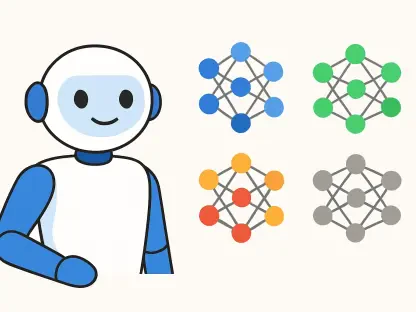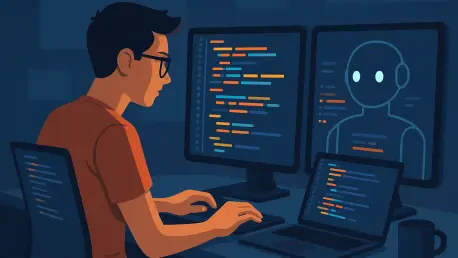

Recent shifts in the global technology landscape indicate that the traditional paradigm of manual code entry is rapidly evolving into a sophisticated dialogue between human engineers and highly capable artificial intelligence agents. The current development environment is no longer defined solely by the mastery of syntax or the memorization of complex library functions; instead, it is increasingly characterized by a high-level orchestration of automated tools that handle the mechanical aspects of software creation. This transformation represents a move away from the “lone coder” archetype toward a collaborative model where artificial intelligence serves as a persistent partner in the creative process. By automating repetitive boilerplate, identifying subtle logical errors, and providing real-scale architectural suggestions, these technologies allow developers to allocate more cognitive energy toward solving high-level business problems and refining user experiences. As these tools become more deeply embedded in the standard toolkit, the fundamental definition of technical proficiency is being rewritten to prioritize logic and systemic thinking over the ability to write raw lines of code by hand.
The Integration: From Simple Snippets to Deep Project Awareness
The initial wave of generative technology introduced foundational tools such as ChatGPT, which functioned primarily as a conversational resource or a digital mentor for isolated tasks. In the current landscape, these platforms act as versatile entry points for developers who need to explore unfamiliar frameworks or generate specific snippets in languages like Python or React Native. However, while these conversational interfaces are excellent for providing explanations and troubleshooting distinct blocks of logic, they often struggle with the broader nuances of a complex, multi-file software architecture. The primary value of these general-purpose tools lies in their ability to serve as a comprehensive knowledge base, effectively replacing traditional documentation searches with direct, actionable answers. This baseline capability established the groundwork for more specialized systems, yet the real progress occurred when the intelligence was moved directly into the development environment itself, allowing the machine to observe the entire structure of a project rather than viewing code in a vacuum.
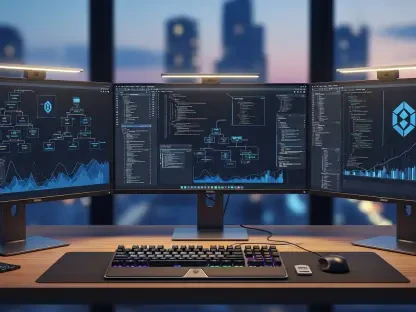
Building on that foundation, a new generation of integrated development environments, such as Cursor and Windsurf, has moved beyond simple chat interfaces to achieve profound contextual awareness. These “AI-first” editors are built upon familiar foundations like VS Code but include deep indexing capabilities that allow them to understand the relationships between different files, modules, and dependencies within a specific codebase. This evolution enables features like predictive autocomplete and multi-file refactoring, where a single natural language instruction can trigger simultaneous updates across an entire repository to maintain consistency during an API change or a structural reorganization. Windsurf, for example, excels at learning the specific patterns and stylistic preferences of a particular codebase over time, ensuring that the generated suggestions feel consistent with the existing work. By reducing the cognitive load required to navigate large projects, these tools have turned the act of maintenance and refactoring into a much more fluid and less error-prone experience for professional engineering teams.
The Automation: Autonomous Agents and Full-Stack Generation
The industry is currently witnessing another significant shift toward autonomous agents that do more than just suggest code; they execute full development cycles independently. Claude Code serves as a primary example of this trend, operating directly within the terminal or integrated environment to manage the rigorous “build-test-debug” loops that previously consumed a significant portion of a developer’s day. By utilizing natural language prompts, engineers can instruct these agents to identify a bug, write a corresponding unit test, and then iteratively modify the source code until the test passes successfully. This level of autonomy represents a departure from passive assistance, as the AI takes on the role of a junior partner capable of performing tedious maintenance tasks without constant human oversight. This shift allows senior developers to focus on architectural integrity and security protocols while the agent handles the manual labor of bug fixing and test coverage, thereby accelerating the overall production timeline without sacrificing quality.
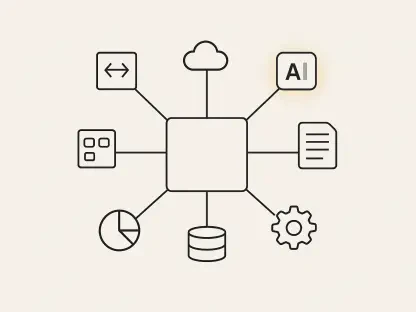
At the most advanced end of the spectrum, platforms like Base44 are redefining who can build software by automating the entire lifecycle from conception to deployment. These systems target a demographic that may lack traditional deep-coding expertise but possesses a clear vision for an application’s functionality and business logic. By managing backend logic, database hosting, and frontend deployment automatically, such tools represent the ultimate streamlining of the development process, effectively removing the traditional barriers to entry for creating full-stack web applications. This advancement suggests that the future of the industry will rely less on the manual construction of infrastructure and more on the ability to clearly define system requirements and user flows. As these autonomous solutions continue to mature, the gap between an initial idea and a fully functional, hosted application is narrowing, forcing a reevaluation of the skills necessary to succeed in a professional environment where technical implementation is increasingly handled by sophisticated, automated backend services.
The Conclusion: Navigating the New Professional Standard
The integration of these advanced technologies required a fundamental shift in how professional developers approached their daily responsibilities. It became clear that the value of an engineer transitioned from the ability to write syntax to the capacity for managing complex logic and systemic design. Teams that successfully adopted these tools focused on enhancing their skills in prompt engineering and architectural oversight, ensuring that the automated outputs aligned with long-term stability and security requirements. Organizations began prioritizing candidates who demonstrated proficiency in navigating these AI-enhanced workflows, as the speed of delivery became a critical competitive advantage. The transition was not about replacing human creativity but about augmenting it to handle the increasing complexity of modern software systems. Ultimately, the most effective practitioners were those who viewed these tools as a way to eliminate technical debt and accelerate innovation, rather than merely a shortcut for basic tasks. The focus turned toward high-level strategy, where the human remained the final arbiter of quality and purpose in an increasingly automated world.