
The pulse of the software development world can often be measured by the grassroots projects that capture the community’s imagination, and the recent showcase at GitHub Universe provided a definitive look at the initiatives currently defining innovation. This curated collection of twelve influential projects serves as more than a simple list of popular repositories; it is a clear reflection of the industry’s priorities and a snapshot of the overarching trends shaping how software is built. A close examination reveals a powerful narrative centered on developer experience, the democratization of complex technologies, and the maturation of the ecosystem itself. These projects, many of which began as simple solutions to a single developer’s problem, have blossomed into foundational platforms, underscoring the enduring power of community-driven innovation to solve tangible problems and redefine what is possible in the digital landscape. They collectively signal a move towards abstracting complexity, empowering individual creators, and building a more resilient and secure open source foundation for the future.
Accelerating Development by Enhancing the Core Workflow
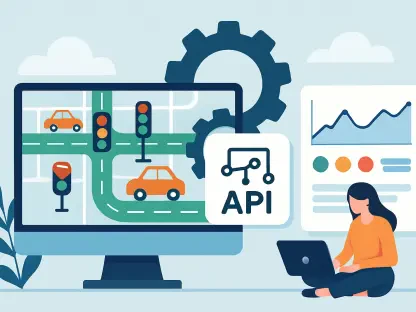
A significant portion of the highlighted projects are laser-focused on refining the developer experience by abstracting away infrastructure complexity and automating tedious aspects of the software lifecycle. Appwrite stands as a prime example, offering an open source backend-as-a-service platform that provides developers with a suite of ready-to-use APIs for authentication, databases, and file storage. By handling this essential but often repetitive backend boilerplate, it empowers developers to accelerate their time-to-market and concentrate on building unique, user-facing features. Its journey from a side project in 2019 to a globally recognized platform reinforces a common theme: powerful tools emerge from the direct needs of the development community. Similarly, GoReleaser targets the crucial final mile of development—the release process. It automates the packaging, signing, and distributing of Go applications, transforming a complex and error-prone manual task into a streamlined, configurable step. Its evolution from a simple shell script to an indispensable tool used by major projects, including GitHub’s own command-line interface, validates its critical role in enhancing productivity and reducing maintainer burnout within the Go ecosystem.
This emphasis on productivity extends down to the most fundamental tools developers interact with daily. Homebrew, aptly described as “the missing package manager for macOS,” has become an indispensable utility for millions, simplifying the installation and management of software and libraries directly from the command line. It acts as the foundational layer upon which countless development environments are built, making it one of the first and most critical installations for professionals across data science, web development, and DevOps. Complementing this is Oh My Zsh, a community-driven framework for the Zsh shell that transforms a standard command-line interface into a powerful, personalized, and aesthetically pleasing workspace. Through a vast ecosystem of plugins and themes, it enhances efficiency with features like autocompletion, syntax highlighting, and git integration, turning a simple utility into a cornerstone of a developer’s workflow. The immense popularity of these projects underscores a fundamental principle: improving the core, daily experience of developers yields massive, compounding gains in productivity and satisfaction across the entire industry.
Making Advanced Technology Accessible to All
Another powerful trend is the democratization of highly specialized and computationally expensive technologies, making them accessible to a wider audience of developers and creators. Moondream exemplifies this shift in the artificial intelligence space. As a visual language model with a remarkably small footprint of just one gigabyte, it brings sophisticated capabilities like image captioning and object detection to commodity hardware, including laptops and edge devices, without the need for powerful and costly GPUs. This breakthrough lowers the barrier to entry for integrating advanced vision AI into applications across diverse fields from robotics to healthcare. It operates alongside the venerable OpenCV, the world-renowned open source computer vision library that has served as the bedrock of the field for over two decades. Originating as a research project in 1999, OpenCV provides a comprehensive toolkit for image and video analysis that powers everything from self-driving cars to social media filters, demonstrating the enduring value of a mature, foundational library in making a complex domain approachable.
This same democratizing spirit is pushing the boundaries of what is possible on the web, particularly in graphics and creative expression. PixiJS provides a high-performance HTML5 rendering engine that leverages modern browser technologies like WebGL and WebGPU to enable the creation of sophisticated 2D graphics, games, and interactive data visualizations. Its intuitive API and rich feature set empower developers without deep graphics programming expertise to build visually stunning experiences that run smoothly in any browser. Taking this a step further into the third dimension, SparkJS makes a cutting-edge photorealistic rendering technique known as Gaussian Splatting accessible to the mainstream. By integrating this method, which represents 3D scenes with millions of tiny particles, into the popular THREE.js library, SparkJS allows web developers to achieve a level of detail and performance previously reserved for offline rendering. Parallel to these advancements, the p5.js and Processing projects continue their mission to bridge the gap between code and creativity, providing accessible programming environments designed specifically for artists, designers, and educators to use code as a medium for visual and interactive art.
Building a More Ambitious and Secure Foundation
Beyond providing tools that enhance existing workflows, the open source community is also undertaking bold, foundational projects that aim to reshape the technological landscape. Perhaps the most ambitious of these is Ladybird, an independent web browser and engine being built entirely from scratch. In an ecosystem dominated by a handful of major browser engines, this initiative represents a monumental effort to foster diversity and innovation in the fundamental technology of the web. Its growth from a small component within the SerenityOS project to a full-fledged browser with over a thousand contributors is a powerful testament to the community’s capacity for long-term, audacious undertakings focused on performance, security, and privacy. In the realm of collaboration, Zulip offers a foundational rethinking of team communication. Unlike the linear, chronological streams of conventional chat applications, Zulip’s unique topic-based threading model brings structure and clarity to conversations, making it highly effective for asynchronous communication in large, distributed teams and open source communities where important discussions can easily get lost.
A Reflection on a Maturing Ecosystem
The showcase ultimately painted a clear picture of an ecosystem that was not only innovative but also increasingly self-aware and focused on long-term health. The inclusion of the Open Source Project Security Baseline (OSPSB) from the OpenSSF signaled a significant step in this maturation. This initiative moved beyond vague best practices to provide project maintainers with a concrete, actionable checklist of minimum security requirements. It established a clear framework for self-assessment and improvement, fostering a shared responsibility model where both maintainers and contributors could work together to strengthen the open source supply chain. This focus on security, combined with the recurring narratives of organic growth and community collaboration seen across all the projects, highlighted a holistic and resilient vision for the future of software. The projects celebrated this year were a powerful reminder that influence is multifaceted, stemming from a desire to solve real problems and fueled by a collaborative spirit that can elevate a single developer’s weekend project into an industry-standard tool.