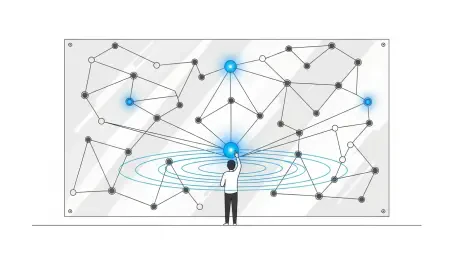

The traditional gatekeepers of software development are witnessing a significant erosion of their monopoly as artificial intelligence transforms the act of creation into a dialogue rather than a technical marathon. This radical transformation has moved the industry away from a world where only those with years of specialized technical training can build functional, high-impact tools. At the center of this shift is the emergence of the “tech ingénue,” a persona defined by a lack of formal coding expertise but an abundance of curiosity and strategic thinking. This evolution suggests that the barrier to entry for creating complex software has been lowered significantly, allowing individuals who previously felt excluded from the technology sector to begin experimenting with digital creation in ways that were once reserved for senior engineers. The transition is not merely about making tasks easier for experts; it is about rewriting the definition of what it means to be a builder in a digital-first economy.
This new era is defined largely by “vibe-coding,” a process where creators use natural language prompts to describe the desired output rather than manually writing every line of complex syntax. For those who identify as poor coders or non-technical professionals, this approach offers a liberating bypass around the frustrations of traditional programming languages and rigid syntax rules. However, the challenge for these new creators remains moving beyond simple novelties to build something that provides genuine, practical value in a professional environment. Transitioning from a passive consumer of AI tools to an active builder requires a specific project to serve as a catalyst for growth. Often, the initial hurdle is a lingering skepticism regarding whether an AI can truly understand the nuances of a specific workplace or a complex, proprietary problem. Overcoming this doubt involves finding a goal that is both personally motivating and professionally relevant, turning a theoretical interest in artificial intelligence into a tangible experiment in automation and data management that produces measurable results.
The Cultural Stakes: Navigating Internal Recognition
To understand the motivation behind high-level technical experiments by non-experts, one must look at the internal ecosystem of a major technology company like Stack Overflow. The organization utilizes a private knowledge-sharing platform known as Stack Internal, where employees collaborate on everything from high-level technical documentation to mundane administrative policies. This platform functions as a critical repository of institutional intelligence, relying on a system of human validation where users upvote helpful answers and formally accept solutions to ensure the most accurate information rises to the top of search results. This meritocratic system creates a digital paper trail of expertise, yet it can be intimidating for those who do not feel confident in their technical contributions, often leading to a divide between the most vocal contributors and those who consume information silently.
The social heart of this knowledge-sharing platform is the Leaderboard, a weekly ranking of the most active and helpful contributors based on their reputation points earned through community interaction. Topping this list is a mark of significant internal prestige, as the results are frequently shared in company-wide communications by the CEO and other executive leaders. For a long-term employee who has remained invisible in this reputation economy, the Leaderboard represents a form of “Stacker fame” that seems unreachable through traditional manual contributions alone. The desire to crack this leaderboard was not just about vanity; it served as a perfect test case for whether an AI agent could bridge the gap between technical invisibility and professional influence. By connecting an agent to internal data, it becomes possible to identify exactly what the community needs to know but hasn’t yet documented, providing a strategic advantage that manual browsing cannot replicate.
Standardizing Data Access: The Model Context Protocol
The technological engine behind this ambitious goal is the Model Context Protocol, commonly referred to as MCP. Historically, connecting a Large Language Model to external, proprietary data sources was a cumbersome process that required building unique connectors for every different tool or application. This “bespoke plumbing” was often too complex for a non-technical person to handle, creating a significant bottleneck that limited the utility of AI agents in specific corporate environments. Without a standardized way to access data, AI models were often stuck in a vacuum, unable to “see” the internal workings of a company or its real-time data streams. This limitation meant that even the most advanced models were frequently relegated to general tasks rather than solving specific, data-dependent problems within an organization.
MCP acts as a universal translator that sits above traditional application programming interfaces, providing a consistent framework for AI interaction. Instead of requiring a custom bridge for every single data source, MCP provides a standardized way for AI agents to understand and interact with external tools securely and efficiently. This protocol allows an agent to move beyond just reading information; it enables bidirectional interaction, meaning the AI can both analyze data from a source and take action within that source on behalf of the user. This technological foundation is what allows an AI to become truly “agentic,” meaning it can operate with a level of autonomy. By using MCP, an agent can navigate the vast repository of a company’s internal knowledge with a speed and precision that no human could match, transforming the AI from a simple chatbot into a sophisticated scout and strategist capable of identifying trends and suggesting actions based on real-time data.
Foundations of Growth: Moving Toward Logical Literacy
Despite the immense power of modern AI, there remains a compelling argument for learning the fundamental principles of computer science and logic. Even for someone relying heavily on automation and agentic workflows, moving from the “worst coder” to an “okayest coder” provides a necessary layer of oversight and quality control. Enrolling in basic programming courses, such as Python for Everybody, helps a builder understand that code is not just a collection of random symbols and curly brackets, but a logical narrative built on conditionals, loops, and data structures. This educational journey allows the user to demystify the “black box” of AI output, providing them with the tools to critique the logic of the code the agent produces. When a user can read the output of an AI agent, they gain the ability to spot where a loop might be failing or why a specific condition isn’t being met, which is essential for complex troubleshooting.
This transition from passive consumer to active participant is a crucial step in ensuring that the software being built is actually functional, reliable, and secure. However, the presence of powerful AI tools creates a unique paradox in the learning process that every modern student must navigate. The struggle to manually fix a small block of code is often where true learning and cognitive growth happen, yet the temptation to let an AI solve the problem in seconds is immense and often irresistible. Navigating this tension requires a delicate balance between using tools for maximum efficiency and engaging with the underlying logic to build a sense of architectural foresight. By understanding the “story” the code is telling, a non-technical creator can ensure they are not just generating lines of text, but are instead orchestrating a coherent system that functions according to their specific requirements and ethical standards.
Technical Execution: Building and Debugging the Leaderboard Agent
The actual development of a custom AI agent is surprisingly fast once the underlying logic is understood, often taking less than thirty minutes of active natural language prompting. The real work, however, lies in the logistical and environmental hurdles that often stymie beginner developers. For a person without a traditional technical background, challenges like navigating corporate IT approvals for specific Python versions, installing local Streamlit servers, and securely managing API keys represent a steep learning curve. These environmental factors require a high degree of persistence and a willingness to troubleshoot minor configuration errors that an experienced developer might solve instinctively. The process highlights that while AI handles the syntax, the human user must still act as the systems administrator, ensuring the digital environment is capable of hosting and running the agent’s logic.
Once these environmental hurdles are cleared, the agent can be programmed with a comprehensive suite of capabilities designed to achieve a specific professional goal. The “Leaderboard Agent” was specifically designed to surface hot topics within the company, find unanswered questions that represented knowledge gaps, and score the potential relevance and impact of a proposed post. This allowed the user to see which topics were most likely to garner high engagement and upvotes before they even began the drafting process. The final stage of development involves giving the agent the power to act within the ecosystem it is monitoring. By configuring the agent to not only draft content but also post it directly to the internal platform via the MCP server, the user creates a seamless, automated workflow. This level of automation allows a non-coder to operate at the scale of a much more experienced developer, leveraging the AI to handle both the high-level data analysis and the technical execution of the project.
Strategic Integration: Achieving Results and Ethical Outcomes
Ethical considerations are paramount when using AI to influence a community-driven platform or a corporate knowledge base. To avoid flooding the system with low-quality “slop”—automated content that adds no value—it is essential to establish strict rules of engagement. These include ensuring that every contribution is genuinely useful, that the information shared is accurate, and that the user actually understands and stands behind the content the AI assists in creating. The goal is to use the AI as a strategic tool for timing, relevance, and refinement rather than as a tool for spamming the community. By maintaining this high standard, the user ensures that their rise on the leaderboard is based on the quality and utility of their contributions, even if those contributions were identified and polished by an artificial intelligence.
The results of this strategic approach were both immediate and dramatic in the context of the Stack Internal experiment. By using the agent to identify high-interest topics and timing contributions to match company-wide discussions, the user was able to climb the rankings with unprecedented speed. This project culminated in the user securing the top spot on the internal leaderboard, demonstrating that AI-assisted content can be indistinguishable from—and in some cases more effective than—manually created content. Beyond the extrinsic reward of the ranking, the process led to a significant shift in self-perception and professional confidence. The transition from technical insecurity to empowered curiosity showed that the most important skill in the modern era is not manual syntax proficiency, but the imagination to define a goal and the persistence to orchestrate the tools needed to reach it. In a world of agentic AI and standardized protocols, even those who once considered themselves the “worst” coders have the potential to achieve top-tier results and participate in the creative craft of software development.
Actionable Strategies for the Next Generation of Builders
The success of the leaderboard experiment provided several key insights that established a blueprint for non-technical professionals seeking to leverage AI in their own workflows. First, the project demonstrated that specialized, narrow-purpose agents are significantly more effective than general-purpose chatbots for solving specific business problems. By focusing an agent on a single goal—identifying knowledge gaps—it was possible to create a tool that outperformed general LLMs in terms of utility and accuracy. Furthermore, the use of the Model Context Protocol proved that the democratization of data is the most critical factor in the democratization of coding. Without the ability to securely and easily connect an AI to internal data, the most sophisticated models remain limited in their practical application. Professionals should look toward adopting standardized protocols as a means to unlock the full potential of their existing data sets without needing to hire a full team of specialized developers.
Moving forward, individuals and organizations should focus on developing “logical literacy” alongside AI proficiency. The experiment showed that while the AI could handle the execution, the human’s ability to direct that execution toward a strategic goal was the deciding factor in the project’s success. This involves training staff not just in prompt engineering, but in the structural logic of software—understanding how data flows through a system and how to audit the decisions made by an autonomous agent. Organizations should also establish clear ethical frameworks for AI-generated content to ensure that the ease of creation does not lead to a degradation of the quality of information within their internal systems. By prioritizing high-value, human-vetted contributions, companies can use agentic AI to enhance their collective intelligence rather than just increasing the volume of their digital noise. The future of work will likely belong to those who can effectively orchestrate these AI agents to solve the complex, human-centric problems that remain beyond the reach of pure automation.