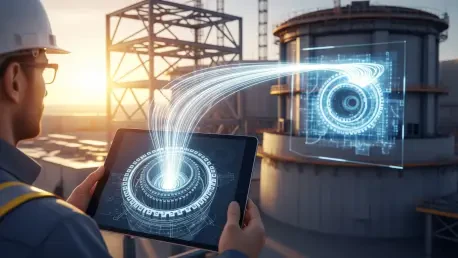

The staggering financial and logistical hurdles of nuclear reactor construction have long been the primary obstacles preventing this powerful, low-carbon energy source from achieving its full potential in the global energy transition. For decades, the industry has grappled with massive upfront capital costs, which can account for up to 60% of a reactor’s total price, and notoriously complex construction timelines that often stretch for years, if not decades. These challenges have made nuclear power a difficult investment for utilities and a source of frustration for policymakers seeking reliable, large-scale clean energy. In response to this long-standing industrial challenge, a groundbreaking partnership between Westinghouse and Google Cloud aims to leverage artificial intelligence to fundamentally reshape how nuclear power plants are built. By developing an advanced AI platform, the collaboration seeks to make construction faster, more affordable, and more predictable, potentially positioning nuclear energy as a far more viable and attractive component in the global shift away from fossil fuels.
A New Blueprint for Nuclear Projects
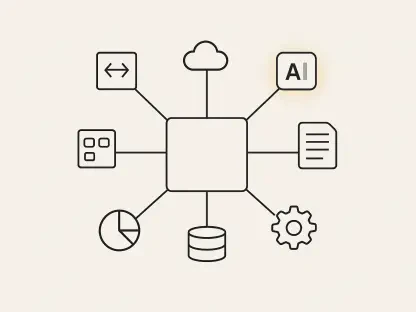
The initiative moves the industry far beyond its reliance on outdated, paper-based processes by introducing a sophisticated, dual-AI system designed for the unique complexities of the nuclear sector. At its core are two specialized AI models: one named “Hive,” which is trained to process and interpret complex nuclear regulatory frameworks, and “Bertha,” a generative AI assistant that draws its knowledge from 75 years of Westinghouse’s proprietary nuclear documentation. These systems are intricately integrated with Google’s powerful predictive analytics tools and WNEXUS, Westinghouse’s comprehensive 3D digital twin of its reactor designs. This creates a unified digital ecosystem where every component, process, and regulatory requirement is modeled and analyzed. The platform’s initial application focuses on streamlining the labyrinthine licensing and pre-construction phases, an area where delays can add years and billions to a project’s cost. By automating data analysis and ensuring regulatory compliance from the outset, the system aims to create a solid, error-free foundation before a single piece of concrete is poured.
This digital transformation extends directly to the physical construction site, where the AI platform functions as an intelligent project management hub. Its predictive capabilities allow it to anticipate potential bottlenecks in the construction sequence, from material delivery to workforce allocation, enabling project managers to take preemptive action. The system can dynamically optimize construction tasks, adjust staffing levels based on real-time progress, and even model the impact of external factors like supply chain disruptions or adverse weather conditions. This level of foresight and control is crucial for making nuclear power a more attractive investment for utilities, which could ultimately lead to lower energy bills and more reliable power for consumers. The overarching goal is to transform a process known for its unpredictability into one that is highly managed and efficient. This enhanced predictability supports Westinghouse’s ambitious target to have 10 of its AP1000 reactors operational by 2030, a fleet with the capacity to power 7.5 million homes and help meet the United States’ growing energy needs.
A Calculated Step Toward a Nuclear Renaissance
The collaboration between these industry leaders represented a pivotal moment that sought to redefine the economic viability of nuclear power. The project’s success was not measured merely in shortened timelines or reduced costs but in the fundamental shift it introduced to an industry historically defined by caution and tradition. By integrating generative AI with predictive analytics and digital twin technology, the initiative provided a tangible pathway to de-risk the enormous capital investments that had long hindered the sector’s growth. This was more than just a technological upgrade; it was a new business model for nuclear energy. The platform’s ability to manage the entire project lifecycle, from initial regulatory filings to enhancing operational safety and minimizing downtime during maintenance, offered a holistic solution. It effectively demonstrated that with the right tools, the immense complexity of nuclear construction could be managed, making it a more dependable and scalable solution in the urgent quest for stable, low-carbon energy.