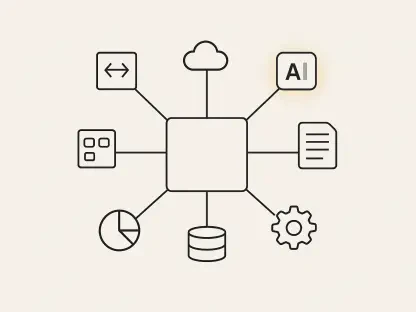

The relentless pressure on modern businesses to enhance efficiency and foster innovation is often undermined by a pervasive, yet frequently overlooked, adversary: operational friction born from repetitive, high-volume manual tasks. This silent drain on productivity consumes valuable human capital, redirecting skilled professionals from strategic initiatives to mundane, rule-based work that demands high precision but little creative thought. The resolution to this challenge does not lie in a single technological fix but in a powerful, hybrid automation strategy that integrates the strengths of Robotic Process Automation (RPA) with the sophisticated capabilities of Python programming. This synergistic combination provides a pathway to create a truly scalable and intelligent operational ecosystem, transforming workflows from bottlenecks into catalysts for growth and competitive advantage.
The Dual-Pronged Approach to Automation
RPA The Hands of Automation
Robotic Process Automation is best understood as the digital equivalent of a dedicated employee performing repetitive, screen-based tasks, serving as the “hands” of an automated workflow. This technology deploys software robots, or “bots,” meticulously programmed to emulate human actions directly within an application’s user interface. These bots can interpret on-screen information, execute precise keystrokes, navigate complex systems, and manage file transfers with flawless accuracy. A key advantage of this approach is its non-invasive nature. Because RPA interacts with systems at the presentation layer—the same way a human user does—it does not require access to underlying code or dedicated Application Programming Interfaces (APIs). This capability makes it an exceptionally effective and cost-efficient solution for modernizing workflows that involve legacy systems, which often predate modern integration standards and would otherwise require extensive, disruptive, and expensive overhauls.
Instead of embarking on a high-risk project to replace an entire software suite, an organization can deploy an RPA bot to simply “log in” and operate the existing system. This method allows for rapid automation deployment with minimal disruption to ongoing business operations. The bots can seamlessly bridge the gap between disparate applications, such as copying data from an old mainframe system and pasting it into a modern cloud-based CRM, a task that would otherwise require manual intervention prone to error. By automating these surface-level interactions, RPA provides an immediate lift in productivity and accuracy, handling high-volume, rule-based processes around the clock without fatigue. This allows businesses to extract more value from their existing technology investments while laying the groundwork for more profound, end-to-end process transformation, effectively creating a more agile and responsive operational framework without the need for a complete technological rebuild.
Python The Brains Behind the Operation
While RPA expertly manages the surface-level interactions, Python functions as the “brain” or the sophisticated intelligence engine driving the automation strategy from behind the scenes. Its role is to handle the complex computational, logical, and data-intensive challenges that lie beyond the scope of UI-based bots. Python’s reputation as a powerhouse in automation stems from its remarkable versatility, clear and readable syntax, and an expansive ecosystem of specialized libraries. These attributes have made it the language of choice for data science, artificial intelligence, and advanced backend system integration. When a business process demands more than simple clicks, data entry, and screen navigation, Python’s capabilities become indispensable for adding a crucial layer of cognitive depth and analytical power to the workflow, transforming a simple automated task into an intelligent, adaptive process that can handle ambiguity and complexity.
The practical applications of Python in a hybrid automation environment are vast and impactful. For instance, its powerful libraries like Pandas are instrumental in manipulating and cleaning enormous datasets, ensuring that the information fed into other systems is accurate and well-organized. For integrating disconnected Software-as-a-Service (SaaS) platforms, Python scripts can leverage API connections to create a seamless and automated flow of data between applications, eliminating the need for manual data reconciliation. Furthermore, its proficiency in machine learning allows for the implementation of models that enable systems to make basic, data-driven decisions, such as flagging potentially fraudulent transactions based on historical patterns. Python can also parse unstructured documents like PDFs or images using Optical Character Recognition (OCR) to extract critical data, or even analyze the sentiment in customer emails to prioritize support tickets, showcasing its capacity to handle complex data formats and add a layer of intelligent interpretation to the entire automated process.
Creating a Unified and Intelligent System
Synergy in Action The Hyperautomation Model
The true transformative potential of this automation philosophy is unlocked when RPA and Python are integrated into a single, cohesive strategy, often referred to as hyperautomation or intelligent automation. This hybrid model allows organizations to automate complex, end-to-end business processes that would be too multifaceted for either technology to handle in isolation. By assigning tasks based on their specific requirements—RPA for UI-based execution and Python for backend logic and data processing—a seamless, efficient, and exceptionally robust automated system can be constructed. This approach moves beyond simple task automation to orchestrate entire workflows, connecting disparate systems and incorporating intelligent decision-making capabilities to handle exceptions and variations without human intervention, thereby creating a truly autonomous operational flow.
A quintessential example of this synergy is a modern invoice processing workflow. In this scenario, the process begins with an RPA bot acting as the frontline digital worker, continuously monitoring a designated email inbox for incoming invoices. Upon arrival, the bot automatically downloads the invoice attachments and initiates the next stage. At this point, it hands the task over to a Python script, which takes on the role of intelligent processor. The script employs OCR to extract key data points—such as invoice number, date, and line-item amounts—from the document, regardless of its format. It then proceeds to perform complex validation, cross-referencing the information with purchase orders in a database, verifying tax calculations, and even applying predefined rules to check for signs of potential fraud. Once the Python script completes its analysis and validates the invoice’s legitimacy, the RPA bot seamlessly resumes its role, logging into the company’s enterprise resource planning (ERP) or accounting software and accurately entering the validated data to schedule the payment, completing the cycle with perfect precision.
The Compelling Business Case for Automation
The justification for adopting an intelligent automation strategy extends far beyond simple labor cost reduction; it addresses the significant “hidden costs of manual tasks” that can quietly erode a company’s profitability and competitive edge. Human error, an inevitable consequence of repetitive and monotonous work, can lead to critical data inconsistencies that require countless hours of investigative work to rectify. These seemingly minor mistakes often have cascading negative consequences, resulting in missed deadlines, inaccurate financial reporting, dissatisfied clients, and, in some cases, severe regulatory compliance penalties. Furthermore, the impact on employee engagement and morale cannot be overstated. When highly skilled, creative professionals are relegated to mundane “data-shoveling” roles, their potential for innovation is stifled, job satisfaction plummets, and employee turnover rates invariably increase, creating additional costs associated with recruitment and training.
By automating these error-prone and unfulfilling tasks, an organization not only protects its bottom line but also cultivates a more positive and productive organizational culture. Automated systems are designed to operate 24/7 without the need for breaks, holidays, or sick leave, processing thousands of transactions with a level of accuracy and consistency that is humanly impossible. This operational shift fundamentally redefines the role of the human workforce. Liberated from the drudgery of repetitive data entry and reconciliation, employees can redirect their focus toward high-value, revenue-driving activities that demand uniquely human skills: strategic thinking, creative problem-solving, complex client relationship management, and long-term business development. This strategic reallocation of human capital is where the true, transformative value of automation is realized, fostering an environment of continuous improvement and innovation that directly contributes to sustainable growth.
Practical Implementation and Long-Term Strategy
Identifying Prime Opportunities for Automation
To successfully embark on an automation journey, businesses should begin by identifying key use cases where implementation can yield immediate and measurable improvements in operational speed and accuracy. The Finance and Accounting department is often a prime candidate, with numerous processes ripe for automation. Tasks such as invoice processing, which involves repetitive data extraction and entry; bank statement reconciliation, a notoriously time-consuming and detail-oriented activity; and employee expense management, which requires adherence to strict corporate policies, can all be streamlined to reduce manual effort and minimize the risk of costly errors. Automating these core financial functions not only accelerates closing cycles but also provides finance teams with more time for strategic analysis and forecasting, turning a traditionally reactive department into a proactive business partner.
Beyond finance, other departments stand to gain significant efficiencies. In Human Resources, the entire employee onboarding process presents a powerful opportunity. Its many repetitive steps—creating email accounts, setting up payroll profiles, granting access to various systems, and distributing standard documentation—can be orchestrated and completed in a matter of seconds by an automated workflow. This ensures a consistent and error-free experience for every new hire while freeing up HR professionals to focus on more personalized aspects of onboarding. Similarly, in Customer Service, bots can be deployed to handle initial ticket sorting, automatically routing inquiries to the appropriate agent or department. They can also provide instant responses to basic, high-volume queries, such as order status checks or requests for address changes, thereby reducing wait times and allowing human agents to dedicate their expertise to resolving more complex and emotionally nuanced customer issues that require empathy and critical thinking.
Measuring Success and Calculating ROI
A critical component of any successful automation initiative is the ability to effectively measure its impact and demonstrate a clear return on investment (ROI). A foundational approach to this calculation involves a straightforward formulROI = ((Manual Cost – Automated Cost) / Implementation Cost) x 100. This provides a clear financial snapshot of the direct cost savings achieved by replacing manual labor with an automated solution. However, a truly comprehensive analysis must look beyond these immediate figures to incorporate the immense value of “avoided cost.” These are the potential catastrophic expenses that automation helps to mitigate. For example, a single, significant data breach resulting from a human clerical error or a failed compliance audit due to inconsistent process execution can lead to devastating financial penalties, legal fees, and long-term reputational damage that far outweighs the initial investment in automation.
By ensuring that business processes are executed flawlessly and consistently every single time, automation acts as a powerful risk mitigation tool. This enhanced reliability is a crucial, though often less tangible, component of its overall value proposition. When building the business case, it is essential to quantify these avoided risks wherever possible. For instance, one could analyze the average industry cost of a compliance failure or the financial impact of a specific type of data entry error that has occurred in the past. This broader perspective on ROI helps stakeholders understand that the investment is not merely an operational expense but a strategic imperative that strengthens the organization’s resilience, security posture, and long-term viability. A well-executed automation strategy, therefore, delivers value not only by reducing existing costs but also by proactively preventing future ones, creating a more stable and predictable business environment.
Building the Right Team for Sustainable Growth
The long-term success of any automation initiative ultimately rested not on the technology itself, but on the caliber of the talent responsible for designing, building, and maintaining it. A meticulous process for vetting and hiring both RPA and Python developers became the cornerstone of a sustainable strategy. An effective RPA developer needed more than just proficiency with leading automation platforms; they required a profound understanding of business process mapping. This critical skill involved translating intricate, and often un-documented, human workflows into logical, efficient, and resilient bot sequences. They were the architects who ensured the digital workforce could navigate real-world complexities and exceptions. On the other hand, a skilled Python programmer for automation brought a different set of expertise. Their experience with essential libraries for web scraping, API interaction, and data manipulation, combined with a firm grasp of secure coding practices, was vital for protecting sensitive corporate and customer data while building the intelligent backend of the system.
Ultimately, building a more agile, resilient, and scalable business was achieved by fostering an automation-first mindset throughout the organization and assembling a dedicated in-house team committed to this vision. This approach shifted automation from a series of disconnected, one-time projects into a continuous journey of operational refinement and strategic improvement. This internal center of excellence became responsible for identifying new automation opportunities, maintaining existing workflows, and ensuring that every new system and process was designed with automation in mind from the outset. By investing in this human infrastructure, the organization created an environment where technology consistently augmented human potential. The true measure of success was found in the ability to handle an exponential increase in transaction volume and business complexity without a corresponding linear increase in headcount, which was the ultimate driver of long-term competitive advantage.