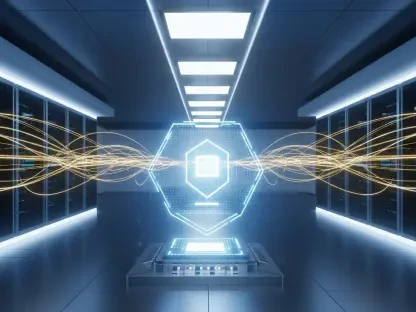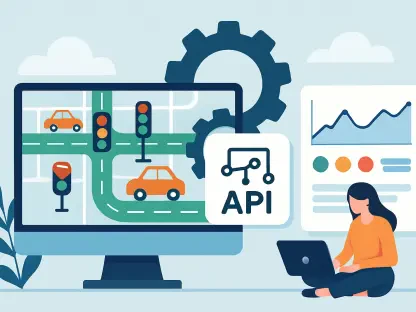

The rapid acceleration of artificial intelligence has introduced a paradigm so foreign and powerful that it has been likened to “alien technology,” a force whose capabilities are advancing faster than the comprehension of even its most seasoned creators. This profound transformation presents a dual-sided reality for software developers, acting as both a significant challenge to established practices and an unprecedented opportunity for growth and innovation. While the sheer complexity and unpredictability of modern AI systems can be overwhelming, programmers who successfully navigate this new terrain stand to amplify their effectiveness tenfold. This journey, however, necessitates a fundamental departure from traditional coding. It requires embracing a new layer of abstraction where sophisticated, nuanced interaction with artificial intelligence becomes the primary driver of value, moving beyond the direct manipulation of code into the realm of strategic system orchestration. The question is no longer about which language to learn, but how to master the art of conversing with and directing these powerful new computational partners.
The Shifting Landscape of Software Development
The very definition of programming is undergoing a radical evolution, expanding from a focused, code-centric discipline into a complex and interconnected ecosystem. This new landscape seamlessly merges traditional coding with high-level system design and the subtleties of natural language interaction. As a result, the developer’s lexicon is rapidly expanding to include terms like “agents,” “prompts,” and “workflows,” which represent a new operational layer. The focus is shifting away from writing granular, line-by-line instructions and toward designing, guiding, and refining intelligent systems that can perform complex tasks autonomously. This evolution does not signal the end of the programmer but rather the dawn of an augmented developer—one who can leverage AI to solve problems at a scale and speed previously unimaginable. The most impactful work is now found in architecting these AI-driven systems, ensuring they are robust, reliable, and aligned with strategic goals, making the developer a conductor of an intelligent orchestra rather than a lone instrumentalist.
A Mandate for Continuous Evolution
The dialogue around AI’s role in development ultimately underscored the necessity for adaptation over resistance, framing a clear path forward for professionals in the field. To effectively implement these new technologies, it was argued that developers had to build a new mental model, one that fully accounted for the inherently unpredictable nature of advanced AI. A deep, intuitive understanding of these systems’ unique strengths and weaknesses became critical for success. Consequently, skills that were once peripheral, such as prompt engineering and the thoughtful design of AI-integrated systems, have now become as fundamental as traditional programming languages were in previous decades. The candid admission from industry pioneers of feeling “behind” the curve themselves served as a powerful testament to the pace of this change. It highlighted the urgent and non-negotiable imperative for all developers to have committed to a state of continuous evolution, perpetually updating their skill sets to remain not just employed, but relevant and impactful in a field undergoing its most significant transformation yet.